
Scaling down full-size automotive architecture into a localized chassis introduces an immediate systems engineering problem: how do you balance autonomous operator inputs against external safety overrides under constrained power budgets? In a battery-operated ride-on vehicle designed for operators aged 2 to 7 years, the physical design constraints are rigid, but the integration layer between mechanical drive, parental remote control, and onboard multimedia requires disciplined engineering.
Target Operating Parameters and Mechanical Envelope
Before touching wiring looms or drive controllers, the vehicle's physical envelope dictates the performance boundaries. The platform operates on a miniature chassis replicating real-world vehicle ergonomics while strictly enforcing load limits to prevent drivetrain failure or structural compromise.
| Parameter | Specification | Notes / Operating Boundary |
|---|---|---|
| Target Demographic | Ages 2 to 7 | Determines cockpit geometry and input accessibility |
| Max Payload Capacity | 50 kg (110 lbs) | Hard mechanical limit for chassis and motor assemblies |
| Power Source | Battery-operated | Powers primary traction, control logic, and telemetry |
| Control Interfaces | Dual-input | Onboard manual inputs paired with parental remote control |
| Auxiliary Subsystems | Multimedia Integration | Onboard infotainment subsystem |
Exceeding the 50 kg payload limit directly degrades battery efficiency and strains the underlying drive assembly. Operating strictly within this envelope ensures the power distribution system delivers predictable torque without triggering thermal shutdowns on high-demand starts.
Dual-Input Control and Parental Remote Override Logic
The core challenge of this build centers on input arbitration. The vehicle supports local controls for child operation while maintaining an authoritative parental remote control link.
[Local Cockpit Inputs]   -----\
                               +--> [Control Arbitration Unit] --> [Motor Drive Electronics]
[Parental Remote Link]   -----/          (Remote Prioritized)
In any scaled automotive build targeting the 2 to 7 age group, the parental remote control signal must act as a hard interrupt. When the external remote issues a steering, throttle, or emergency braking command, the onboard control logic must immediately preempt local cockpit signals. This ensures zero latency during safety interventions while keeping the driving experience intuitive for the primary operator.
Power Distribution and Subsystem Layout
A battery-operated architecture requires isolated pathways for high-draw traction motors and sensitive digital electronics.
- Traction Drivetrain: The battery feeds the primary motor array to handle payload weights up to 50 kg. Voltage fluctuations under sudden acceleration must not brown out downstream auxiliary components.
- Parental Remote Receiver: This module requires clean, steady power to maintain a continuous, low-latency link with the external transmitter.
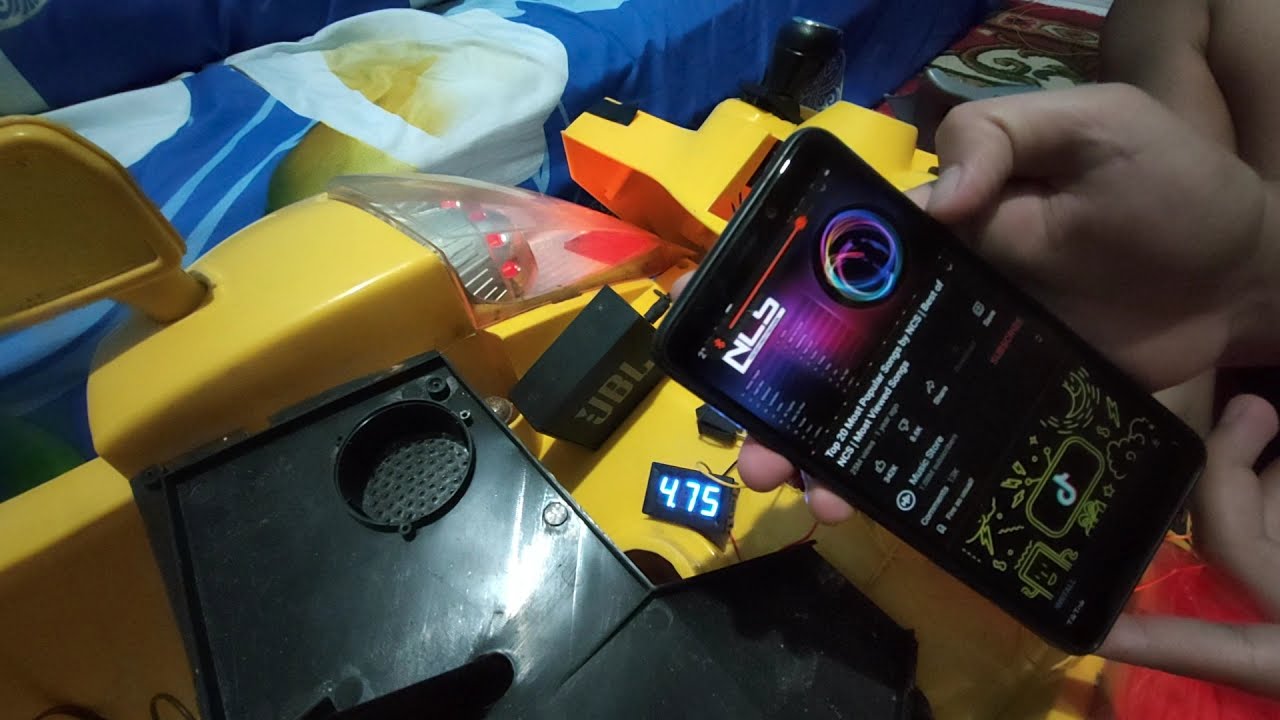
- Multimedia Subsystem: Integrated directly into the dashboard console, this unit delivers audio and visual features mimicking standard automotive cockpits without interfering with drive telemetry.
Isolating the infotainment and logic wiring from high-current traction lines prevents electromagnetic interference and protects the safety-critical remote override mechanism.
Integration Lifecycle
Building out the scaled platform moves through three focused milestones:
1. Structural and Chassis Assembly
Verify mechanical tolerances across the scaled automotive frame. Ensure steering linkages, seat anchors, and axle mounts remain fully rated for the 50 kg ceiling.
2. Drivetrain and Control Wiring
Mount the battery unit and interface the drive electronics with the dual-input arbitration controller. Validate that the parental remote instantly overrides local pedal and wheel inputs under dynamic load.
3. Multimedia and Console Finalization
Hook up the auxiliary multimedia dashboard components to the secondary power bus, verify low-voltage isolation, and execute full load testing across standard operating cycles.