Artificial incubation is fundamentally a closed-loop climate control problem where slight environmental drifts translate directly into catastrophic yield loss. If you rely on complex, inefficient AC setups to drive heating and environmental regulation, you introduce unnecessary failure points into what should be a robust biological deployment. Shifting the entire architecture to a direct-current (DC) power profile solves the low-voltage stability equation while keeping production costs minimal.
A DC-powered egg incubator is a specialized rig engineered specifically to hatch eggs artificially by nailing precise temperature and humidity thresholds. Primarily deployed across chicken and poultry production pipelines, this setup directly maximizes hatch success rates by removing the chaos of inconsistent brooding environments.
The Subsystem Architecture
To maintain high hatch rates, an incubator must manage environmental telemetry in real time without allowing the internal microclimate to collapse. The DC setup achieves this through a tightly integrated physical and control topology.
+-------------------------------------------------------+
|                 DC Power Supply Architecture          |
+-------------------------------------------------------+
                           |
                           v
+-------------------------------------------------------+
|         Dedicated Temp/Humidity Controller            |
|       (Continuous Telemetry & Climate Control)        |
+-------------------------------------------------------+
                           |
                           v
+-------------------------------------------------------+
|                  Internal Chamber                     |
|  +-------------------------------------------------+  |
|  |     Custom Cradles (Clutch Retention Matrix)    |  |
|  |     Moisture Retention & Humidity Management    |  |
|  +-------------------------------------------------+  |
+-------------------------------------------------------+
1. Dedicated Control Module
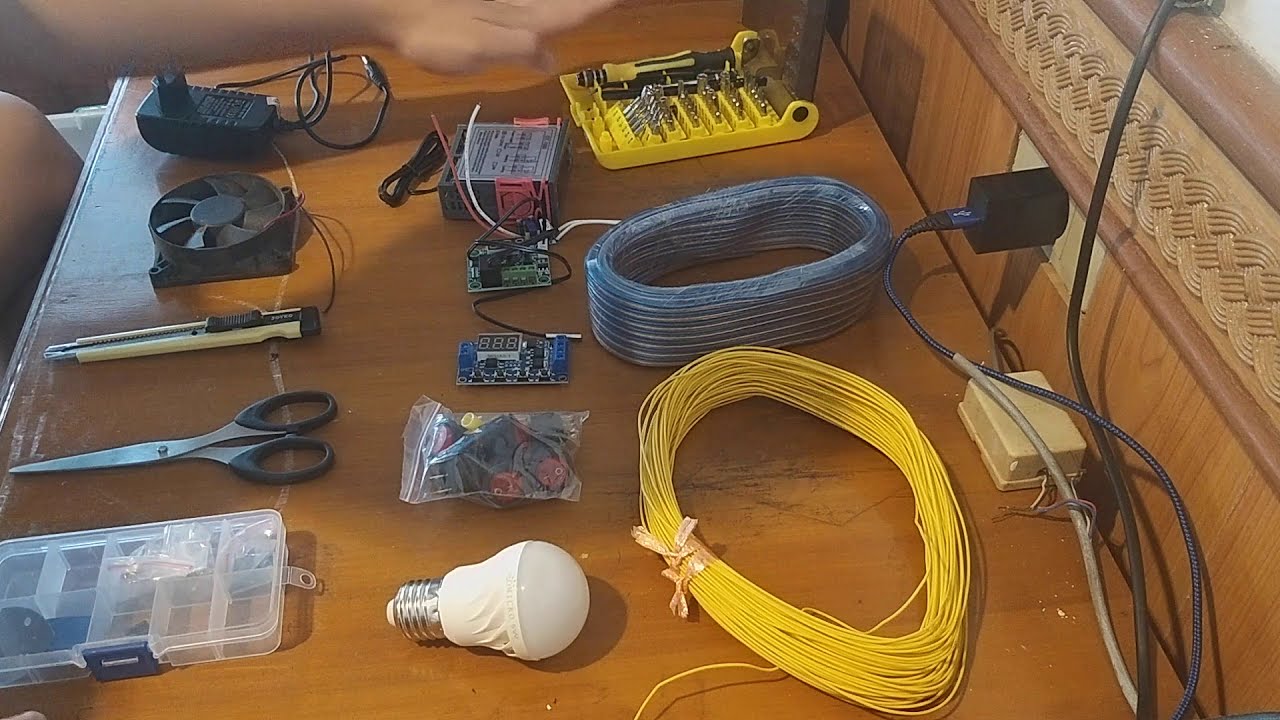
The core of the system relies on an out-of-the-box climate control stack. This dedicated temperature and humidity controller module continuously mimics the exact natural brooding environment. By consolidating sensor inputs and load switching into a dedicated unit, the system autonomously sustains the necessary microclimate without requiring manual intervention.
2. Custom Cradle Matrix
Inside the chassis, the eggs are housed in specialized custom cradles. These structural supports fulfill two concurrent engineering requirements:
- Mechanically securing the clutch to prevent displacement.
- Maintaining optimal moisture levels across the entire surface area of the eggs.
System Topology Comparison
Running a direct-current environment provides distinct structural advantages over traditional approaches:
| Design Dimension | Traditional Brooding Systems | DC-Powered Incubator Architecture |
|---|---|---|
| Power Profile | High-voltage AC / Variable Natural | Direct Current (DC) Low-Voltage |
| Environmental Control | Manual or Unregulated Brooding | Dedicated Temp/Humidity Controller Module |
| Egg Placement | Loose / Variable Substrates | Custom Retention Cradles |
| Primary Objective | Standard Brooding | Maximized Artificial Hatch Success Rates |
| Deployment Target | General Poultry | Chicken and Poultry Production Units |
Engineering the Microclimate
The ultimate goal of artificial incubation is predictability. Natural brooding introduces external variables that lower production yields, from fluctuating nest moisture to uneven heat distribution.
By standardizing on a DC-powered footprint with dedicated control hardware, the incubator creates a repeatable environment. The controller continuously regulates the critical sweet spots for temperature and moisture, allowing poultry operations to scale their hatching throughput on a strict budget.